
GPT-6 Astra: OpenAI’s New Model for Agentic AI
What is different from previous GPT models, how it operates, and why computer use and multi-step execution matter. It is designed to do more of the work itself.
AI & Work | New Stardom
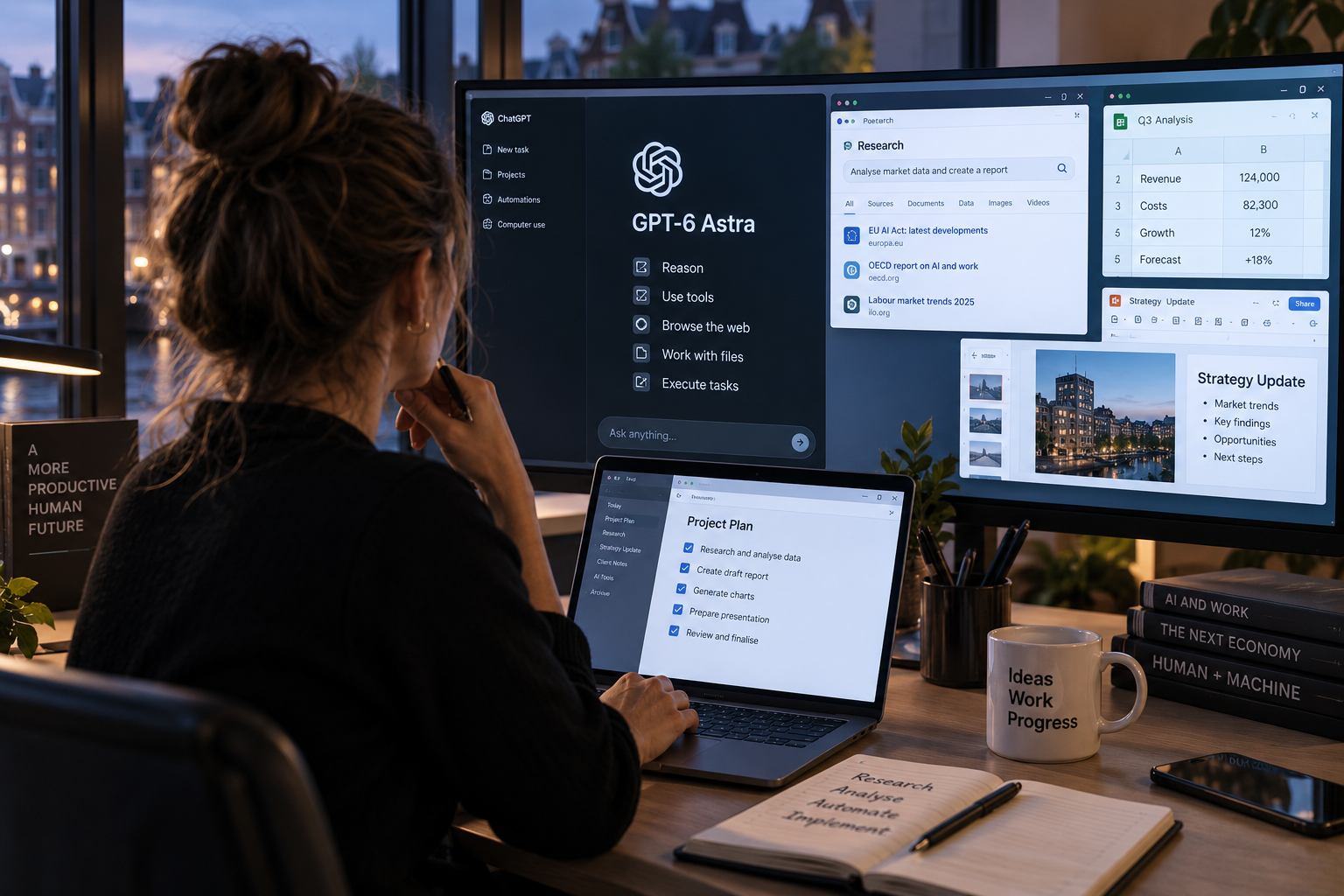
Image AI-generated for New Stardom
OpenAI released GPT-6 Astra on September 3, describing it as a reasoning model for complex computer-based tasks, software engineering, research and professional work. Its main technical capability is computer use. Astra can interact with websites and applications, use external tools, work with files and carry out sequences of actions based on a user’s objective.
The model can fill in online forms, update CRM records, organise calendars, conduct research, analyse data and work with documents, spreadsheets and presentations. It can also create and test software. These tasks require the model to interpret information, decide which action to take, execute that action and assess the resulting state of the application. OpenAI has built these capabilities into the model and its tool framework.

Available Now
Astra has a 1.05-million-token context window and can generate up to 128,000 tokens in a single response. The API provides access to functions, web search, file search and computer use, allowing developers to connect the model to external systems and business applications. Its reasoning effort can also be configured according to the task.
Computer use is particularly relevant to business automation because many workplace processes involve several applications. An employee might retrieve information from email, check a CRM record, consult an internal document, enter information into another system and prepare a report. Astra can potentially perform several of these operations within one task when it has the necessary access.

The model can also maintain a task while instructions change. OpenAI's API documentation describes mid-turn steering, which allows new instructions to be introduced while a task is underway. Astra can incorporate the additional information and continue the existing task. It also supports asynchronous tool calls, allowing some reasoning to continue while an external operation is being completed.
These capabilities are part of the development of agentic AI. An agent receives an objective, determines a sequence of operations and uses available tools to execute them. The degree of autonomy depends on the system around the model: developers decide which applications and functions Astra can access, what actions it can perform and where human approval is required.
Those controls matter because computer access gives an AI system the ability to change information and trigger actions. OpenAI has classified Astra at the Critical level for cybersecurity capability under its Preparedness Framework and has introduced additional safeguards and monitoring for the model.
For businesses, the relevant development is the ability to apply AI to complete workflows that involve several digital systems. The technology still depends on model reliability, appropriate permissions, monitoring and human oversight. GPT-6 Astra provides the underlying reasoning and computer-use capabilities required for this type of system; how far organisations use those capabilities will depend on how they design and control the workflows around the model.
Have insights on AI and the future of work? Submit an opinion piece to New Stardom. Love work and career books? Explore our fun workplace book collection.
New Stardom covers the Future of Work, AI, and emerging job trends. Stay informed and explore more on New Stardom.