
How Hiring Is Shifting Across Six European Labour Markets: LinkedIn’s “Skills on the Rise 2026”
The latest “Skills on the Rise” list from LinkedIn is being marketed as a guide for ambitious professionals. Underneath that, it’s a structured dataset on what is actually changing inside hiring decisions in France, Germany, Italy, the Netherlands, Spain and the UK.
Work News | New Stardom
Trend Analysis
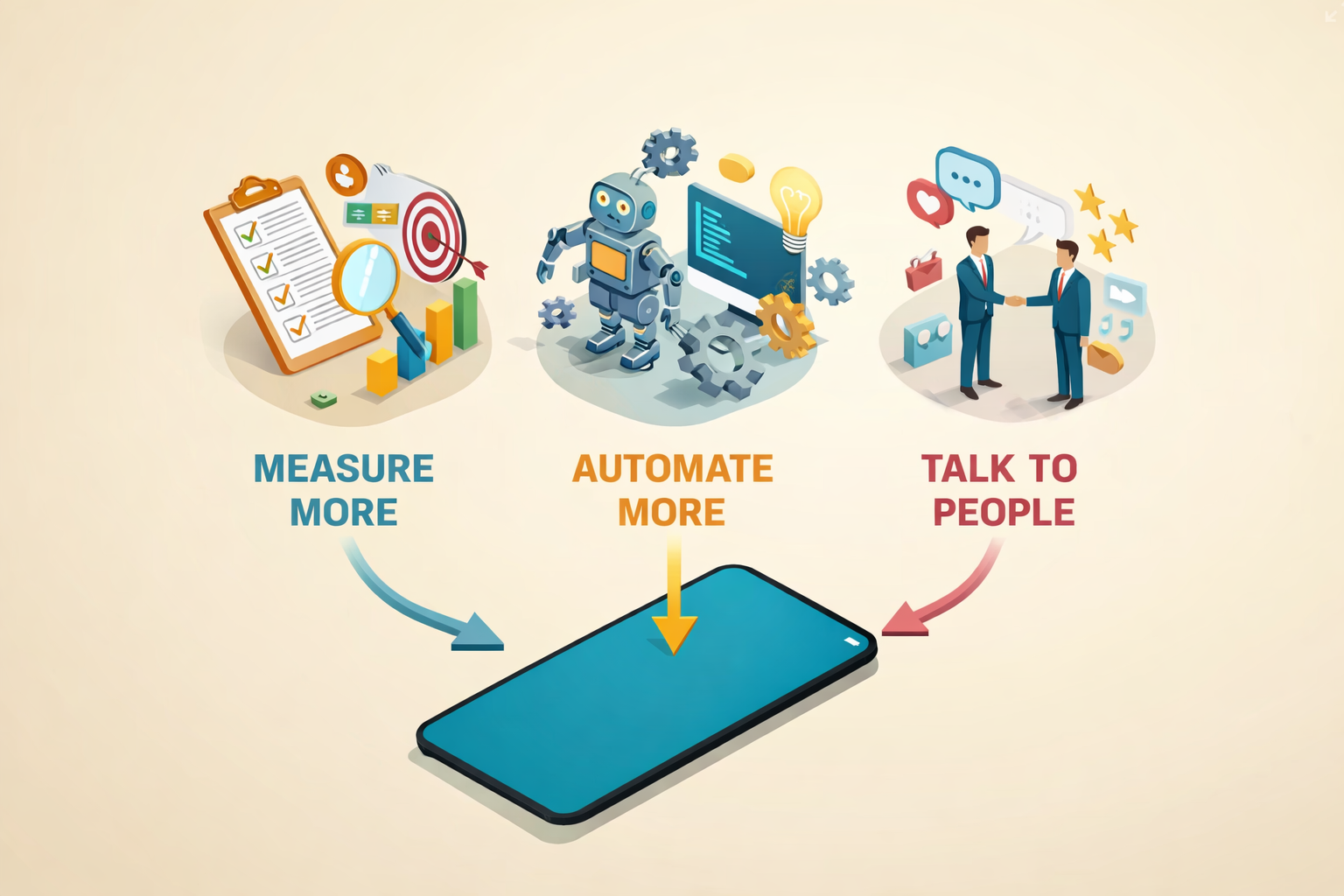
Image: © New Stardom Magazine 2026, created with DALL·E (AI)
The ranking tracks skills not job titles or degrees. LinkedIn looks at how often a skill is added to member profiles, and how often that same skill appears among people who were hired between December 2024 and November 2025, compared with the previous 12-month period. Skills that grow quickly on both dimensions make the cut. Very broad, basic or purely language-related skills are excluded, and individual skills are grouped into broader categories that sit on top of the raw tags.
The result is a more balanced picture, where AI-adjacent capabilities, data and cloud infrastructure, and process discipline sit alongside customer work and old-fashioned communication and relationship skills.
Across the six countries the data points in the same direction, with more measurement, more automation and work that still depends on people talking to each other.
First, measurement and performance management are everywhere. France’s fast-growing categories include performance management, KPI steering, cross-functional collaboration and timeline and dependency management. Italy and the Netherlands both have “data-driven decision making” and business insights near the top. In the UK, one full cluster combines data-driven decisions, data storytelling, process automation and workflow optimisation. The language varies by country, but it all sits in the same zone: employers want people who can read numbers, connect them to actual work, and adjust course without waiting for a monthly report.
Second, AI and infrastructure show up as enabling layers rather than stand-alone specialisms. Spain is the clearest example as one of its clusters blends generative AI with consulting, interdisciplinary collaboration, customer success and data-driven decision making; another lists emerging technologies, FastAPI, identity and access management, applicant tracking systems and digital channels. In Germany, a cloud-focused cluster covers cloud environments, services such as AWS and Azure, infrastructure as code, containerisation and Linux. The message is consistent, the growth is not just in “AI” as a buzzword but in the specific tools and architectures that allow companies to modernise their stack and ship products faster.
Third, human skills are not an add-on as they sit inside the “on the rise” set. Italy has a full cluster dedicated to professional and cross-cultural communication, active listening, conflict resolution, relationship building and collaborative problem solving. The Netherlands has cross-functional collaboration, relationship management, stakeholder engagement, coaching, mentoring and conflict resolution grouped together. Germany’s third cluster highlights professional communication and creative, collaborative problem solving. LinkedIn’s own “why this is rising” notes repeatedly link these skills to more global, cross-functional teams and to the need for people who can carry work across organisational boundaries.
Country by Country and How the Mix Shifts
France
France’s rising skills point to three priorities. One cluster is about performance and coordination: KPI steering, multidisciplinary team coordination, cross-functional collaboration, requirements gathering and timeline and dependency management. Another is operational: deployment and go-live support, technical service operations, technical reporting and technical project leadership. The third sits around customers, with omni-channel communication, customer touchpoint management, CX management, service excellence and loyalty and retention. Put together, this is a picture of organisations trying to see more of what is happening, roll out systems reliably and hold on to customers rather than just acquire new ones.
Germany
Germany’s data tilts toward the infrastructure and content sides of the economy. One cluster is pure cloud engineering, from planning and implementation to scaling, cloud services, infrastructure as code, containerisation and operating systems. Another cluster is squarely in visual content: visual storytelling, graphic design, content planning, Canva and creative ideation. The third covers project management, end-to-end ownership, documentation, strategy implementation and team coordination. It’s essentially “build the stack, tell the story, keep the projects under control.”
Italy
Italy’s three clusters describe a company trying to run more tightly and lead more deliberately. The first focuses on operational efficiency, process standardisation, KPI measurement, operational risk and security operations, and project implementation and execution. The second is senior: strategic leadership and vision, organisational growth strategy, technical leadership, people development, go-to-market and product strategy, and strategic negotiation and partnerships. The third returns to human interaction: cross-cultural communication, active listening, conflict resolution, relationship building and collaborative problem solving. The through-line is execution plus leadership plus the communication to bind them.
The Netherlands
The Netherlands’ clusters read like a playbook for a digital-first, audience-driven economy. One cluster covers strategic marketing, social media strategy, social media management, content creation and community building, which is essentially audience and trust-building at scale. A second cluster centres on data-driven decision making, business insights, analytical reasoning, analytic problem solving and KPIs. A third repeats the human emphasis seen elsewhere: cross-functional collaboration, relationship management, stakeholder engagement, coaching, mentoring and conflict resolution. The combination is clear from the way LinkedIn groups it, which is build the audience, measure what works, and keep relationships and teams intact while you adjust.
Spain
Spain’s fast-growing skills lean hard into internal learning and emerging tech. One cluster mixes consulting, performance metrics, generative AI, tutoring and performance reviews, with the rationale that companies are using curriculum development, mentoring and tutoring to close skill gaps, and are paying more attention to how they measure learning outcomes. A second focuses on emerging technologies and the plumbing that supports them: FastAPI, identity and access management, applicant tracking systems and digital channels. The third returns to a hybrid profile: consulting, interdisciplinary collaboration, generative AI, data-driven decision making and customer success. The common element is translation between business goals and technical solutions.
UK
For the UK, the list centres on strategy, automation and resilience. One cluster combines strategic planning and analysis, technology road-mapping, sales negotiation, revenue growth strategy and relationship management. Another sits on data and automation, joining data-driven decision making, data storytelling, business process automation, process optimisation and workflow management. The final cluster is risk and compliance heavy: governance, risk management and compliance, cyber risk management, ethical decision making, statutory reporting and operational excellence. It is a coherent picture of organisations that want to plan, automate and stay inside the guardrails in a volatile environment.
What This Tells Workers (and Employers)
This list does not capture every sector or every occupation; it’s based on LinkedIn members who are visible on the platform and on roles where skills can be meaningfully tagged. It is also descriptive rather than predictive, it shows what rose quickest between late 2023 and late 2025.
Within those limits, the signal is clear.
If you work in marketing, comms or content, the Netherlands and Germany clusters make it explicit that “creative” is not enough. Strategic marketing and community work are rising alongside data-driven decision making, analytic problem solving and visual storytelling. The high-growth profiles are those where audience building is anchored in measurement and in the ability to turn data into specific changes in channels or formats.
If you sit in operations, product or project roles, France, Italy and Germany all point in the same direction: operational discipline, end-to-end ownership and the ability to coordinate multiple teams. Skills like project documentation, requirements gathering, risk and security operations, KPI management and strategy implementation are the core of several fast-growing categories.
If your job involves managing people or stakeholders, the so-called “soft” clusters are exactly where LinkedIn’s hiring data shows demand rising fastest. Active listening, conflict resolution, stakeholder engagement, coaching and mentoring are being tagged and searched as real capabilities, particularly in Italy and the Netherlands, and as part of broader clusters in Germany and the UK.
For employers the message is simple, treating “AI skills” as a single line item will not build the capabilities they need. The LinkedIn categories always attach AI-adjacent skills to something else, like consulting, curriculum design, customer success, strategy, automation, risk. Building capability means building those combinations, not hiring isolated specialists and hoping the rest of the organisation will adjust itself.
And for workers, there is one practical takeaway, which is whatever your domain, the skills that are rising in this dataset are hybrid. They sit at the intersection of a technical layer (data, AI tools, cloud, automation), an operational or commercial layer (KPIs, projects, revenue, retention) and a human layer (collaboration, communication, mentoring). The more deliberately you can build and signal that mix, the closer you are to what European employers are actually rewarding in their hiring decisions right now, at least according to LinkedIn’s own numbers.
Follow global work and job trends. Subscribe to New Stardom’s newsletter.
This work is funded directly by readers who value independent reporting.
If you find this useful, you can support New Stardom’s independent journalism.
Read Next
Have insights on work and the future of work? Submit an opinion piece to New Stardom. Love work and career books? Explore our fun workplace book collection.
New Stardom is an independent magazine covering the Future of Work, AI, and emerging job trends.
