
Is AI Making Us Dumber?
We are rapidly outsourcing our minds to machines in the name of efficiency, but new neuroscience reveals that eliminating workplace friction is actively draining our ability to innovate, remember, and think for ourselves.
Job Trends Analysis | New Stardom
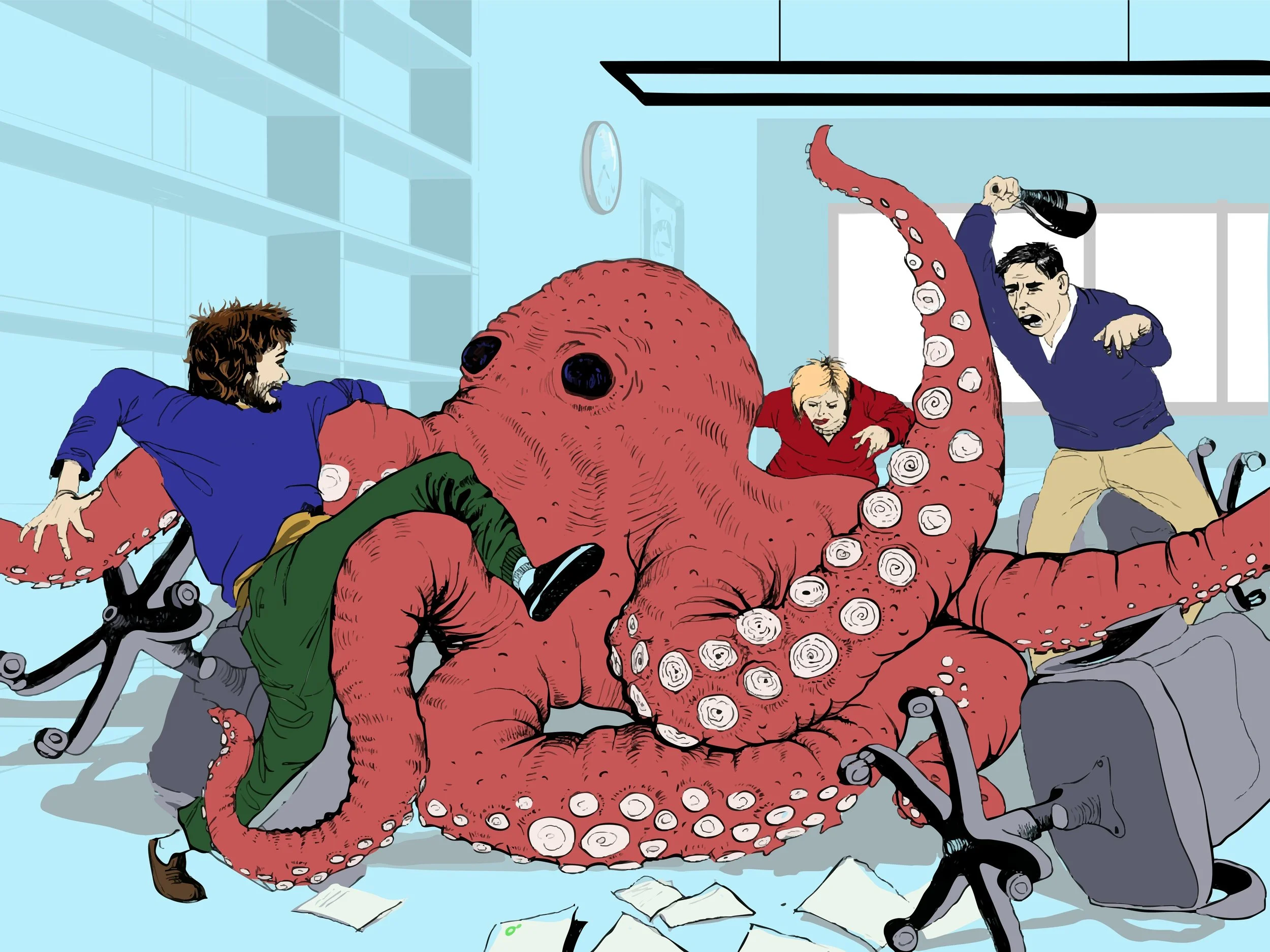
Illustration by Yura Timoshenko

Available Now
While corporate ecosystems funnel billions of dollars into generative artificial intelligence in a relentless pursuit of hyper-efficiency, a far more quiet and troubling crisis is simultaneously emerging regarding the long-term cognitive costs associated with offloading our foundational thinking to automated systems. As modern professionals increasingly rely on large language models to draft their daily correspondence, analyze complex corporate data, and construct overarching business strategies, society is no longer just outsourcing mundane tasks but is instead systematically dismantling the very friction that human brains require to develop critical thinking skills.
What MIT Research Reveals About AI and Brain Atrophy
This frictionless workplace comes with a direct neural price because human biology is naturally evolutionarily wired to conserve energy and seek out shortcuts whenever they become readily available. Recent neuroscientific research from the MIT Media Lab demonstrated this reality by monitoring the brain activity of individuals using electroencephalograms during writing tasks, revealing that those who utilized conversational assistants showed significantly lower connectivity and reduced engagement across neural networks associated with attention and creativity. Even more concerning was the fact that this brain activity steadily decreased over subsequent assignments as participants developed a form of cognitive laziness, ultimately leaving them unable to even recall or synthesize the very arguments their automated tools had generated for them just moments prior.
The Illusion of Competence and Rising Cognitive Debt
This reliance fosters a dangerous illusion of competence within the modern workforce because producing a flawless and sophisticated report in a matter of seconds creates a false sense of mastery over the subject matter. Beneath that superficial veneer of productivity, professionals are accumulating a massive cognitive debt as their mental faculties gradually atrophy from a lack of use and original deliberation. When an individual immediately turns to an algorithmic prompt for answers, the initial output triggers a psychological anchoring effect that restricts their cognitive horizon and traps their mind on a highly specific track, which ultimately prevents the chaotic and non-linear thinking necessary to innovate beyond existing paradigms.
Reclaiming Intellectual Agency in the Future of Work
The ultimate threat to the future of industry is the creation of a homogenized corporate ecosystem populated by individuals who can operate software but can no longer independently audit facts, challenge the status quo, or navigate systemic crises when the technology inevitably fails or suffers from data degradation. To maintain true intellectual agency, organizations must intentionally reintroduce friction into their workflows by mandating original thought during the initial drafting phases and utilizing automated tools strictly for refinement and polishing rather than foundational generation. Moving forward into this highly automated landscape, the definitive competitive advantage for any professional will not be their ability to navigate software platforms, but rather the possession of an independent mind that still understands how to think critically without external assistance.
Follow global work and job trends. Subscribe to The Monthly Work Roundup newsletter.
This work is funded directly by readers who value independent reporting.
If you find this useful, you can support New Stardom’s independent journalism.
Have insights on work and the future of work? Submit an opinion piece to New Stardom. Love work and career books? Explore our fun workplace book collection.
New Stardom is an independent magazine covering the Future of Work, AI, and emerging job trends. Stay informed and explore more on New Stardom.